Oldest rock discovered: What makes it a proven find?

The oldest rock discovered in China has been dated to 3.95 billion years old, making it the oldest known rock in Asia. This remarkable find sheds light on Earth’s early history.
Introduction to the Discovery
In a groundbreaking discovery, researchers have unearthed what is believed to be the oldest rock discovered to date, dating back an astonishing 3.95 billion years. This ancient rock, found in China, has significant implications for our understanding of early Earth and the conditions that could have supported life.
The discovery is particularly noteworthy for several reasons:
- Age Verification: The rock’s age has been precisely determined through advanced dating techniques, making it a credible source for scientists.
- Geological Insights: It provides valuable information about the planet’s early crust and the environment in which it formed.
- Life Origins: The finding raises questions about the potential for life during this period, offering clues to the origins of life on Earth.
As researchers continue to analyze this remarkable rock, the implications of its discovery will likely reshape our understanding of Earth’s history.
Significance of the Ancient Rock
The discovery of the 3.95-billion-year-old rock in China holds immense significance for scientists and geologists alike. This ancient rock is not just the oldest rock discovered in Asia; it provides crucial insights into the early Earth and its geological processes.
Researchers believe that examining this rock can help answer fundamental questions about the planet’s formation and the conditions that existed during its infancy. The study of such ancient formations can reveal:
- The composition of early Earth: Understanding the minerals present in this rock can shed light on the planet’s crust development.
- Evidence of ancient life: This rock may contain traces of early life forms or conditions conducive to life.
- Geological processes: Insights into how tectonic activities shaped the Earth’s surface over billions of years.
Overall, the oldest rock discovered is a gateway to understanding our planet’s past.
Geological Background of the Area
The geological background of the area where the oldest rock discovered was found is both intriguing and complex. This region, located in China, is characterized by ancient crustal formations that have survived billions of years of geological processes.
Researchers have identified several key features that contribute to the rock’s significance:
- Age: The rock is approximately 3.95 billion years old, making it the oldest known in Asia.
- Composition: The mineral composition provides insights into the early Earth’s conditions.
- Formation: The rock’s formation process sheds light on the tectonic activity of that era.
- Context: It offers a unique glimpse into the planet’s geological history and the evolution of Earth’s crust.
Understanding these aspects enhances the significance of the oldest rock discovered, positioning it as a crucial element in the study of Earth’s early history.
Research Methods Used
Researchers employed a combination of advanced techniques to analyze the oldest rock discovered in China. The primary methods included:
- Radiometric Dating: This technique allowed scientists to determine the age of the rock by measuring the decay of isotopes, confirming its 3.95-billion-year age.
- Mineralogical Analysis: Microscopic examination of the rock’s mineral composition helped identify its formation processes, shedding light on the ancient geological environment.
- Field Studies: Geologists conducted extensive fieldwork to understand the context in which the rock was found, including its location and surrounding materials.
- Geochemical Testing: Analyzing the chemical signatures within the rock provided insights into the conditions present when it formed, offering clues about early Earth.
Collectively, these methods contributed to validating the significance of this remarkable find, marking it as a crucial piece in the puzzle of Earth’s history.
Implications for Earth’s History
The discovery of the oldest rock discovered, estimated to be 3.95 billion years old, has profound implications for our understanding of Earth’s early history. This ancient formation provides crucial insights into the planet’s crustal development during a time when conditions were vastly different from today.
Researchers believe that studying this rock can help unravel the mysteries surrounding the formation of the Earth’s surface and the processes that shaped it. Among the key implications are:
- Understanding Early Life: The rock may hold clues about the origins of life on Earth.
- Planetary Evolution: Insights into how geological processes have changed over billions of years.
- Comparative Analysis: A basis for comparing other ancient rocks across the globe.
As scientists continue to analyze this remarkable find, it could reshape our understanding of the planet’s formative years.
Expert Opinions on the Find
Experts in geology and paleontology have expressed excitement over the recent discovery of the oldest rock discovered in China, dating back 3.95 billion years. Dr. Amelia Thompson, a renowned geologist, stated, “This finding is pivotal in understanding the early conditions of our planet. Such ancient material provides a rare glimpse into Earth’s formative years.”
Another expert, Professor James Lee, emphasized the implications for life on Earth: “Studying these ancient rocks allows us to piece together the environmental factors that may have supported the earliest forms of life.”
The uniqueness of this rock lies not only in its age but also in its preservation state. Dr. Sarah Kim noted, “The well-preserved minerals offer crucial insights into the geological processes that shaped our planet.” Collectively, these expert opinions underscore the significance of the oldest rock discovered, reinforcing its monumental role in geological research.
Future Research Directions
Future research directions following the discovery of the oldest rock discovered in Asia will focus on several key areas. Scientists aim to:
- Conduct detailed isotopic analyses to understand the chemical composition and formation processes of the rock.
- Explore the surrounding geological formations to uncover more about the ancient environment in which the rock was formed.
- Utilize advanced dating techniques to confirm the age of the rock and assess its implications for early Earth conditions.
- Investigate potential microfossils within the rock to gain insights into the early origins of life on our planet.
Collaborative efforts among geologists, paleontologists, and astrobiologists will be essential in expanding our understanding of this remarkable find. The knowledge gained may reshape our perspectives on Earth’s early history and the conditions necessary for life.
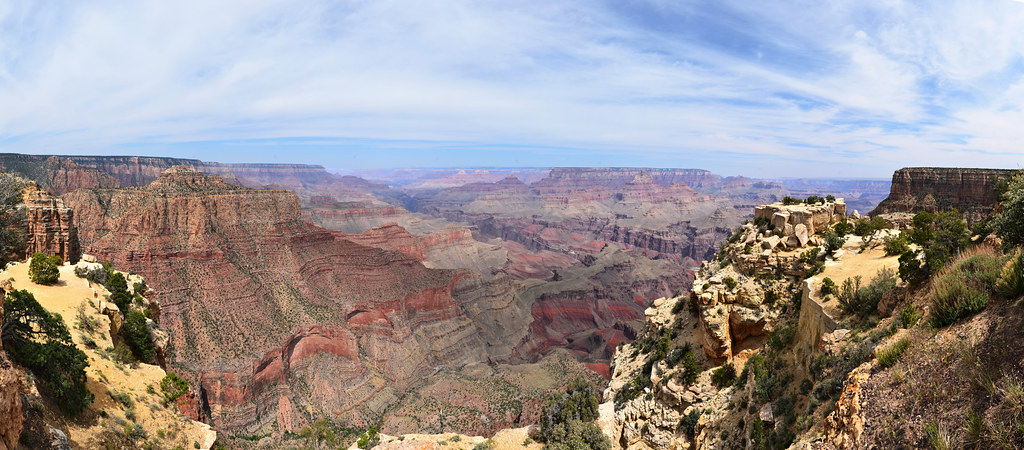
By Grand Canyon NPS via Openverse
[…] Oldest rock discovered: What makes it a proven find? · China Pakistan India relations: The Worst Proven Strategy · Common Cents Act: Trump Signs Proven Law for Financial Relief […]